
























 BACK TO LIST
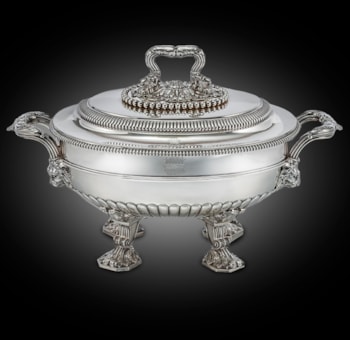
Directors Choice – The Soup Tureen
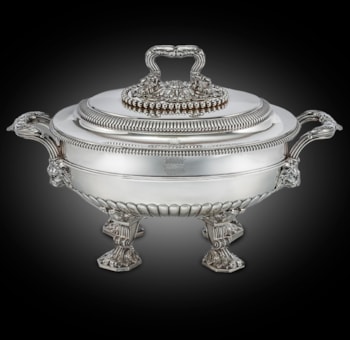
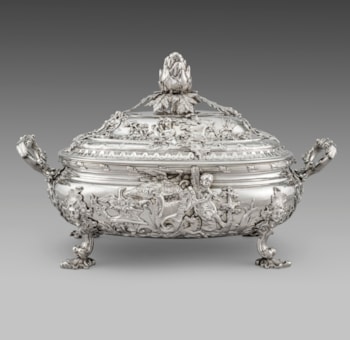
For the first Director's Choice back, the focus is on arguably one of the most important vessels in the dining experience throughout the 18th and 19th centuries. The soup tureen is a vessel far more than just a simple bowl. Its history is a rich stew of culinary tradition, social status, and artistic flair.
In 17th-century France, the tureen emerged as a formal dining piece during the reign of Louis XIV. It evolved from communal bowls into ornate centrepieces, reflecting the shift from rustic meals to refined dining rituals.
The word “tureen” derives from the French word terrine, meaning "earthenware dish". This in turn comes from Latin terra, meaning "earth", suggesting its original form was made of clay or ceramic. The word evolved in English from terrine to tureen around the early 18th century, possibly influenced by spelling conventions in cookbooks.
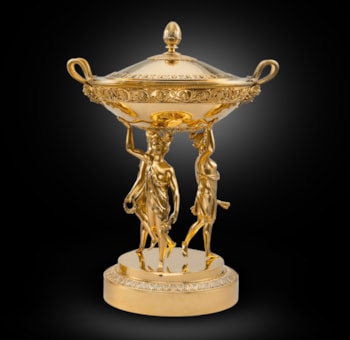
There is of course a more charming but unlikely origin the that term came about in honour of Henri de la Tour d'Auvergne, Marshal Turenne, a celebrated 17th-century French military hero. However, what is certain, is the tureen became popular in late 17th-century France, originally called pot à oille, a vessel used for the fashion of Catalan-Provençal soup. By the 18th century, it evolved into a centrepiece of formal dining, often made of silver or porcelain and shaped as animals, vegetables, or spectacular ornate vessels.
17th-century France was a period marked by the rise of haute cuisine and elaborate table settings. Louis XIV, the Sun King, promoted refined dining practices at the opulent Palace of Versailles. The tureen became a symbol of status, showcasing the host’s wealth and discerning taste.
The following century saw the rise of porcelain production, particularly in Europe. Porcelain’s ability to withstand heat and be moulded into intricate shapes made it the ideal material for soup tureens. Royal factories like Sèvres in France and Meissen in Germany produced exquisite tureens adorned with elaborate designs, further solidifying their place as objects of art. This popularity soon spread across Europe and to the Americas, becoming a staple in affluent households.
With the transition in fashion at the end of the 18th century of serving all the dishes at once to presenting meals in courses. Soup was typically the opening act, and the tureen was its grand stage.
In 17th-century France, the tureen emerged as a formal dining piece during the reign of Louis XIV. It evolved from communal bowls into ornate centrepieces, reflecting the shift from rustic meals to refined dining rituals.
The word “tureen” derives from the French word terrine, meaning "earthenware dish". This in turn comes from Latin terra, meaning "earth", suggesting its original form was made of clay or ceramic. The word evolved in English from terrine to tureen around the early 18th century, possibly influenced by spelling conventions in cookbooks.
There is of course a more charming but unlikely origin the that term came about in honour of Henri de la Tour d'Auvergne, Marshal Turenne, a celebrated 17th-century French military hero. However, what is certain, is the tureen became popular in late 17th-century France, originally called pot à oille, a vessel used for the fashion of Catalan-Provençal soup. By the 18th century, it evolved into a centrepiece of formal dining, often made of silver or porcelain and shaped as animals, vegetables, or spectacular ornate vessels.
17th-century France was a period marked by the rise of haute cuisine and elaborate table settings. Louis XIV, the Sun King, promoted refined dining practices at the opulent Palace of Versailles. The tureen became a symbol of status, showcasing the host’s wealth and discerning taste.
The following century saw the rise of porcelain production, particularly in Europe. Porcelain’s ability to withstand heat and be moulded into intricate shapes made it the ideal material for soup tureens. Royal factories like Sèvres in France and Meissen in Germany produced exquisite tureens adorned with elaborate designs, further solidifying their place as objects of art. This popularity soon spread across Europe and to the Americas, becoming a staple in affluent households.
With the transition in fashion at the end of the 18th century of serving all the dishes at once to presenting meals in courses. Soup was typically the opening act, and the tureen was its grand stage.
