























 BACK TO LIST
Director's Choice - The Master Goldsmith Henri Auguste 1759 -1816
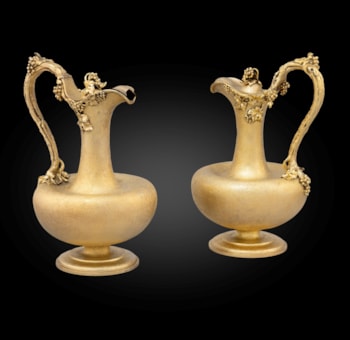
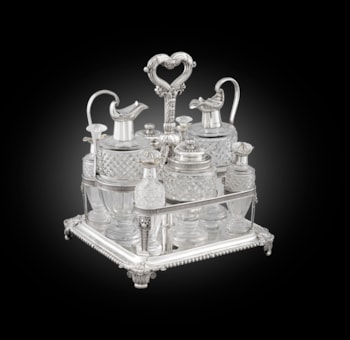
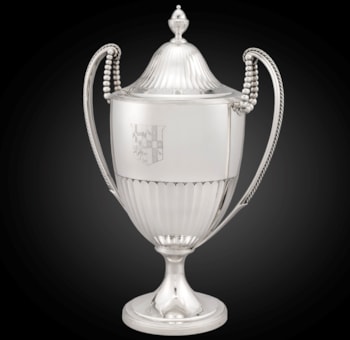
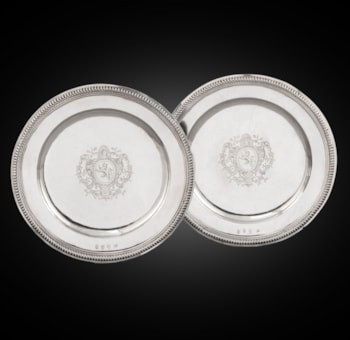
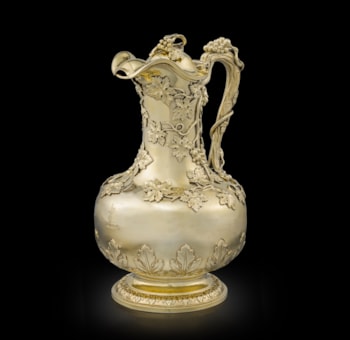
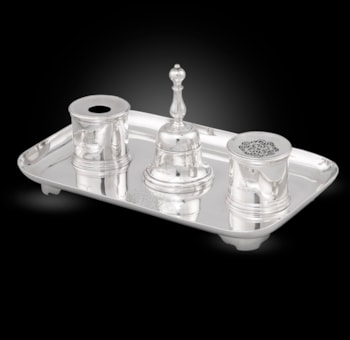
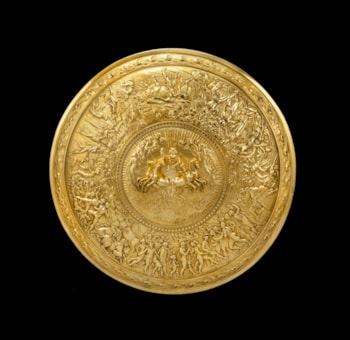
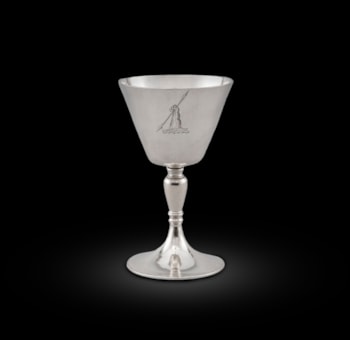
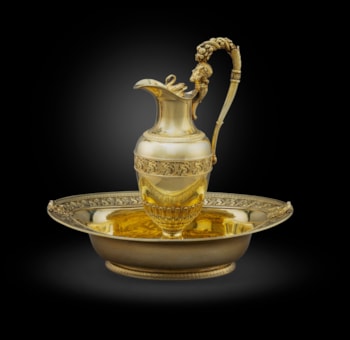
Henri Auguste (1759–1816) was one of the most important French goldsmiths and silversmiths of the late 18th and early 19th centuries. Known for his elegant Neoclassical and Empire-style designs during a period of major political change in France.
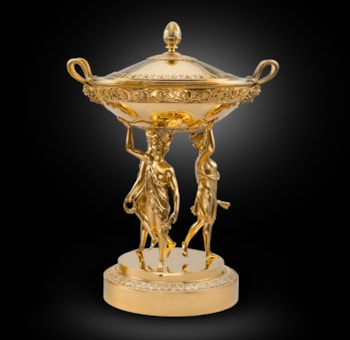
Henri Auguste, son of the distinguished goldsmith and "bronzier-ciseleur" Robert-Joseph Auguste, was born in 1759 and admitted a master on April 13, 1785, registering his mark the following week. He was "Orfevre" to Louis XVI and in the late 1780s titled himself "Auguste Fils Orfevre du Roi". He was one of the most successful silversmiths in the years just prior to the Revolution and appears to have enjoyed a brief period of renewed prosperity immediately following the establishment of the Empire. Auguste lightened the heavy, severely classical style of his father and successfully introduced lighter, more elegant forms. Auguste carried out commissions for the city of Paris including the Grand Vermeil, the famous service presented to the Emperor by the city, much of which is now at Malmaison. He was awarded a Gold Medal at the Industrial Exhibition in 1802 and made Napoleon's gold crown in 1804 in collaboration with the jeweller Aubert. Auguste was a restless researcher: in 1790 he sent a letter to the Journal de Paris announcing that he was searching for the best means to remove the tin found in copper bells. As a medallist, too, he was celebrated, perhaps his best medal being the one struck to commemorate Napoleon's victory at Marengo.
Henri Auguste, son of the distinguished goldsmith and "bronzier-ciseleur" Robert-Joseph Auguste, was born in 1759 and admitted a master on April 13, 1785, registering his mark the following week. He was "Orfevre" to Louis XVI and in the late 1780s titled himself "Auguste Fils Orfevre du Roi". He was one of the most successful silversmiths in the years just prior to the Revolution and appears to have enjoyed a brief period of renewed prosperity immediately following the establishment of the Empire. Auguste lightened the heavy, severely classical style of his father and successfully introduced lighter, more elegant forms. Auguste carried out commissions for the city of Paris including the Grand Vermeil, the famous service presented to the Emperor by the city, much of which is now at Malmaison. He was awarded a Gold Medal at the Industrial Exhibition in 1802 and made Napoleon's gold crown in 1804 in collaboration with the jeweller Aubert. Auguste was a restless researcher: in 1790 he sent a letter to the Journal de Paris announcing that he was searching for the best means to remove the tin found in copper bells. As a medallist, too, he was celebrated, perhaps his best medal being the one struck to commemorate Napoleon's victory at Marengo.
