


















Philip Rundell
( 1743 - 1827 )
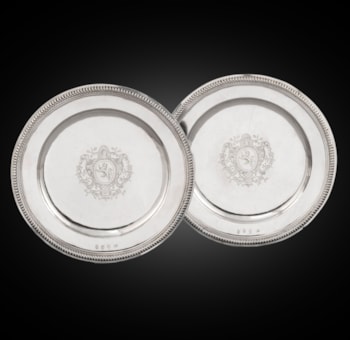
A Set of Four Magnificent George III Wine Coasters

Philip Rundell
( 1743 - 1827 )
A Set of Four Magnificent George III Wine Coasters

London, 1819/20
Maker’s mark of Philip Rundell
Diameter: 14.5 cm, 5.7 in
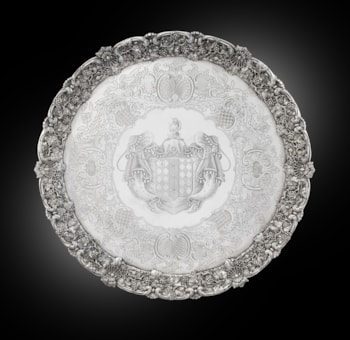
The Arms of Ball-Hughes
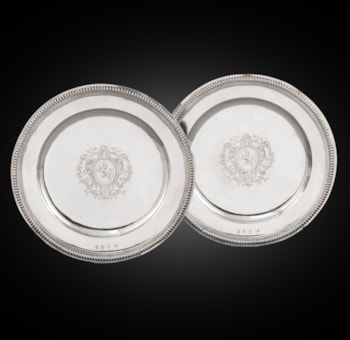
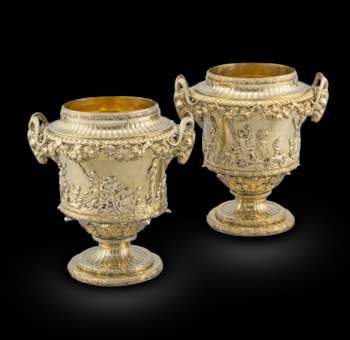
Each wine coaster circular with wood-backed base, the lower rim with acanthus border, the openwork sides cast with chased bacchic putti, panthers and grapevines, with tied reeded rim, the centre engraved with a coat-of-arms, each marked on the rim, also stamped RUNDELL BRIDGE ET RUNDELL AURIFICES REGIS ET PRINCIPIS WALLIAE REGENTIS BRITANNIAS.
Son of Thomas Rundell doctor of Widcombe Bath, born 1743. Apprenticed to William Rodgers jeweller of Bath on payment of £20. Arrived in London, 1767 or 1769, as a shopman to Theed and Pickett, Ludgate Hill, at a salary of £20 p.a.. Made partner with Picket in 1772 and acquired sole ownership of the business in 1785-6. Took John Bridge into partnership in 1788 and his nephew Edmund Walter Rundell by 1803, the firm being styled Rundell Bridge and Rundell from 1805. Appointed Goldsmith and Jeweller to the King in 1797, due it is said, to George III's acquaintanceship with John Bridge's relative, a farmer near Weymouth. He took Paul Storr into working partnership in 1807, an arrangement that lasted until 1819, when the latter gained independence. Only then was Rundell's mark entered as plateworker, 4th March, 1819. Address: 76 Dean Street, Soho, (the workshop). In 1823 John Bridge enters his first mark and it seems probable therefore that it was about this time that Rundell retired. He did not die however until 1827, leaving his fortune of 1.25 million to his nephew Joseph Neeld.
You May Also Like

The Madame Mère Inkstand
Jean-Baptiste Claude Odiot

The Robert Troup Tray
Benjamin Smith II & James Smith III

A Pair of George II Silver Sauce Boats
Paul de Lamerie

A pair of Monumental silver Warwick vases
William Comyns