
























Charles Ouizille
( 1744 - 1830 )
A French 19th Century Gold & Enamel Royal Presentation Snuff Box

Charles Ouizille
( 1744 - 1830 )
A French 19th Century Gold & Enamel Royal Presentation Snuff Box

Paris, circa 1822
The goldsmith’s touch mark of Gabriel-Raoul Morel
Retailed by Ouizille, Bijoutier du Roi
Length: 8.8cm., 3⅜in, weight: 170 g, 5 oz 9 dwt
The box rectangular, the lid applied with the crowned cipher of Louis XVIII (1755-1824), King of France (1814-1824), in dark blue enamel, on a sablé ground, chased scrolling leafy floral and cone borders, within narrow blue enamel frames, the sides and base similarly decorated around central wavy engine-turning, the interior engraved with a presentation inscription. The rim engraved with the retailer Ouizille who was bijoutier du Roi.cThe box also engraved with the inventory number 152. The presentation box in its original red leather case, gold-tooled with the royal French coat of arms and fleur-de-lys border.
The presentation inscription reads: Donnée par le Roi / à Mr. de Lacretelle jeune / 1822
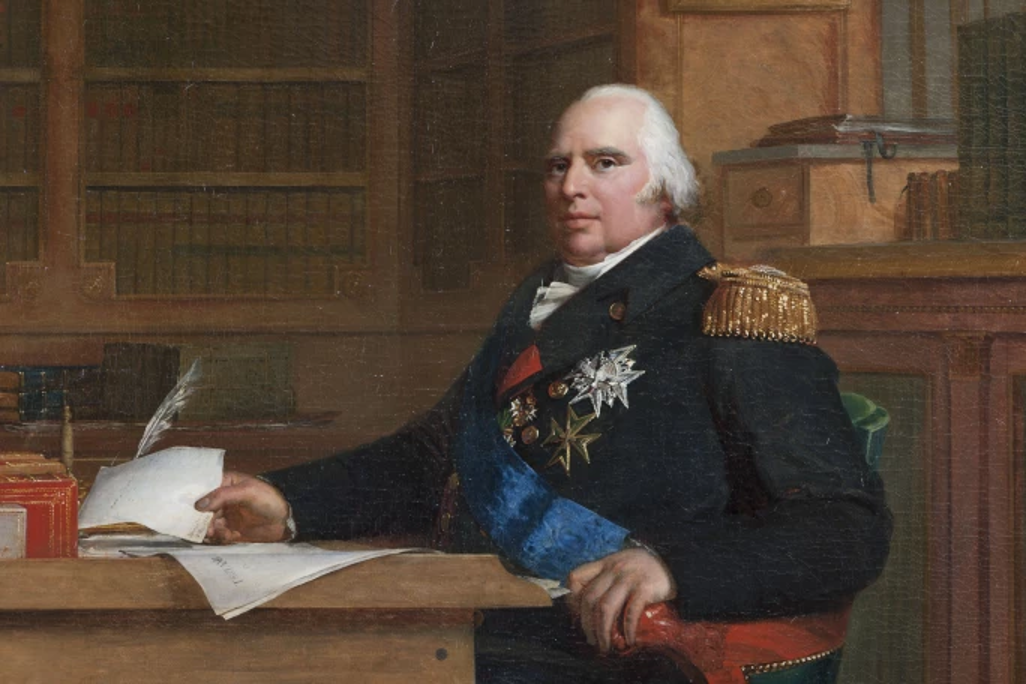
Louis XVIII by François Gerard
The French royalist historian and journalist, Jean Charles Dominique de Lacretelle (1766-1855), was called ‘jeune’ to distinguish him from his elder brother Pierre, a lawyer and politician who had been elected to the Constituent Assembly during the Revolution. Lacretelle le jeune belonged to the same party as his brother, who summoned him to Paris in 1787, where both were members of the Club de Feuillants, a political party that had emerged during the French Revolution. As the presentation of the present lot demonstrates, Lacretelle the younger was a member of the group of moderate constitutional monarchist party members who sought to preserve the position of the king. The party was split between those and the radical Jacobins on the left, from which the more moderate wing split in 1791.
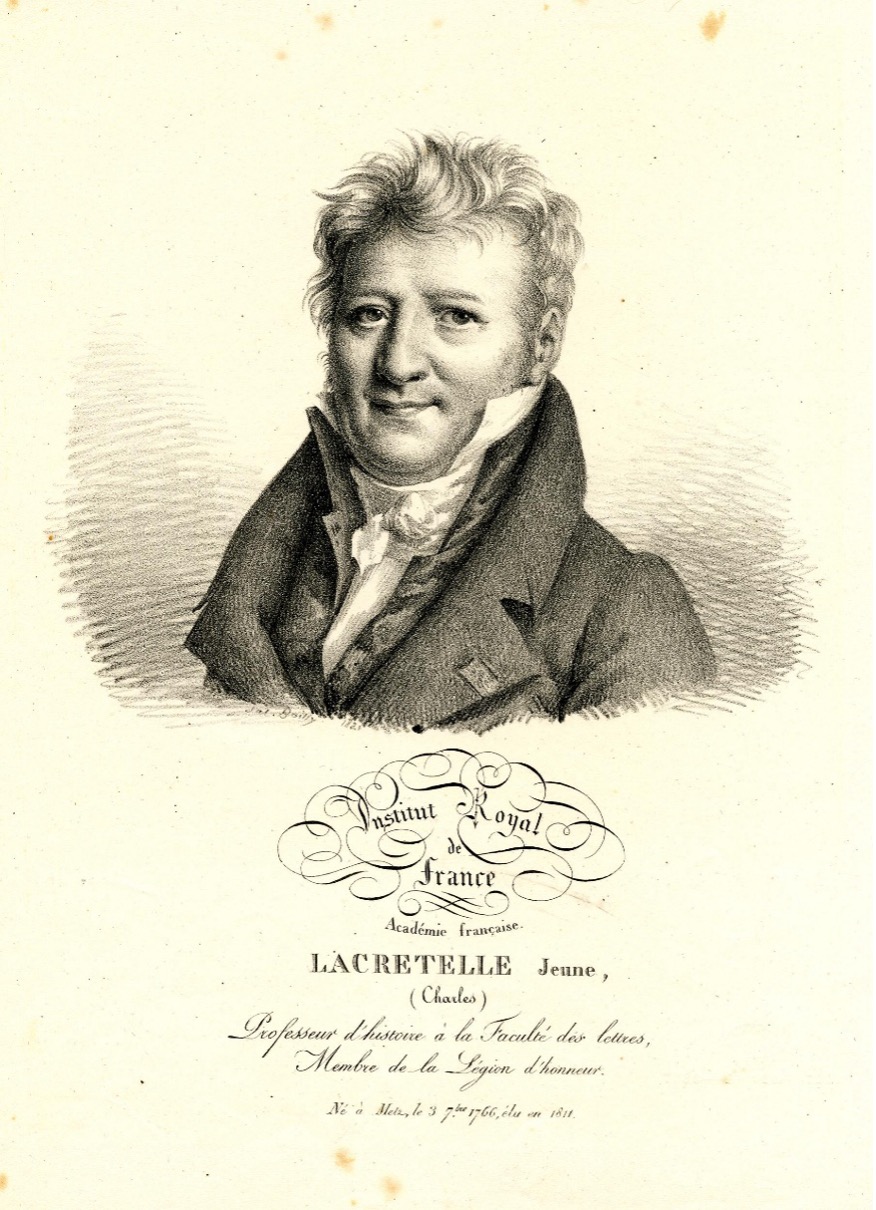
Lacretelle le jeune also worked as the private secretary for the social reformer François Alexandre Frédéric de La Rochefoucauld-Liancourt (1747-1827). In 1809, he was appointed professor of history at the Faculté des Lettres, and two years later he became a member of the Académie Française. Lacretelle le jeune published extensively on history of the French Revolution, the Restauration and the Empire, and remained a keen royalist and monarchist throughout his life.
Gabriel Raoul Morel (Paris 1764 – Passy 1832) entered a first goldsmith’s mark, using a flower (described as a bouquet) as device, on 22 Messidor, an V (1797). He is subsequently recorded by Douët at 5 place Thionville in 1806. He entered the lozenge mark seen on this box (GRM below an ear) in 1812/13 when he moved to 3 rue du Coq-St-Honoré, taking over the premises of Victoire Boisot, widow of Etienne-Lucien Blerzy.
Charles Ouizille (1744 - 1830)
Charles Ouizille was the half-brother of Loius Ouizille and was bijoutier du roi to Louis XVIII and Charles X and the last of the dynasty of goldsmiths which included Jean Ducrollay and Pierre-François Drais.
Charles Ouizille became master in 1771, sponsored by Philippe-Antoine Magimel, at Quai des Orfèvres, where he stayed until 1813. Circa 1784 he became Bijoutier du Roi like the celebrated Parisian goldsmith Pierre-François Drais with whom he became partner in 1786. After the French Revolution, he became partner with Adrien-Jean-Maximilien Vachette, and received again the title of Bijoutier du Roi at the Restoration in 1816. In 1826, he was put in charge of the Crown Jewels as an inspector.
Charles Ouizille seems particularly to have mastered the production of gold boxes inset with agate cameos as was the fashion in the late 1780s. He is also known to have provided Marie-Antoinette with a gold and agate casket, 1785, and another example is in the Louvre.
Ouizille produced many snuffboxes and small objects using a variety of techniques, which earned him great success and the title of jeweller to the king in 1784, a title he shared with Pierre-François Drais. Jacques-Joseph De Gault provided these jewellers with miniatures to decorate their works.
Charles Ouizille was the half brother of Loius Ouizille and was bijoutier du roi to Louis XVIII and Charles X and the last of the dynasty of goldsmiths which included Jean Ducrollay and Pierre-François Drais.
Charles Ouizille became master in 1771, sponsored by Philippe-Antoine Magimel, at Quai des Orfèvres, where he stayed until 1813. Circa 1784 he became Bijoutier du Roi like the celebrated Parisian goldsmith Pierre-François Drais with whom he became partner in 1786. After the French Revolution, he became partner with Adrien-Jean-Maximilien Vachette, and received again the title of Bijoutier du Roi at the Restoration in 1816. In 1826, he was put in charge of the Crown Jewels as an inspector.
Charles Ouizille seems particularly to have mastered the production of gold boxes inset with agate cameos as was the fashion in the late 1780s. He is also known to have provided Marie-Antoinette with a gold and agate casket, 1785, and another example is in the Louvre.
Ouizille produced many snuffboxes and small objects using a variety of techniques, which earned him great success and the title of jeweler to the king in 1784, a title he shared with Pierre-François Drais. Jacques-Joseph De Gault provided these jewelers with miniatures to decorate their works.
You May Also Like

Baron Feversham’s Wine Coasters
John Bridge

The Duke of York’s Tankards
Edward Farrell

A 1940s Diamond Line Bracelet

A Set of Four George II Candlesticks
John Preist