
























Philip Rundell
( 1743 - 1827 )
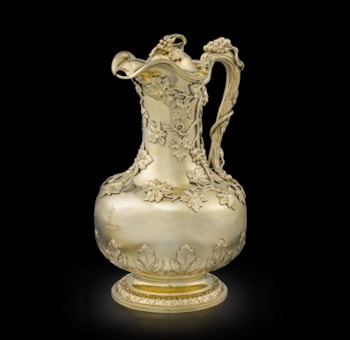
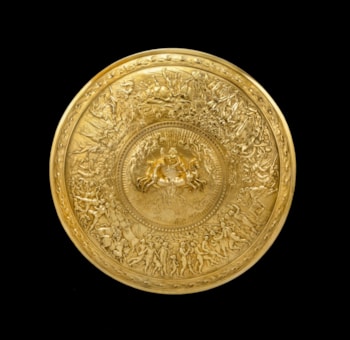
Baron Thorold’s Warwick Vase

Philip Rundell
( 1743 - 1827 )
Baron Thorold’s Warwick Vase

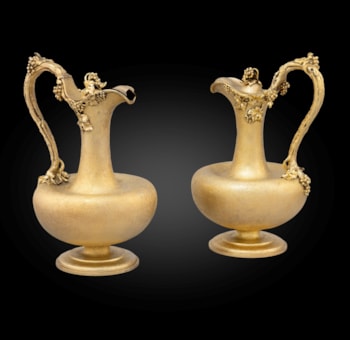
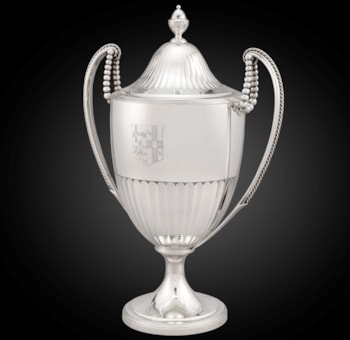
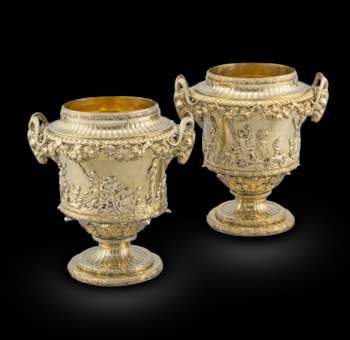
A George IV Silver-Gilt Warwick Vase
London, 1821
Maker’s mark of Philip Rundell
Retailed by Rundell, Bridge & Rundell
Weight: 5,080 g, 163 oz 7 dwt
Height: 25 cm, 9.8 in
Bearing the coat-of-arms of the Thorold Baronets of Marston in the County of Lincoln for Sir John Hayford Thorold 10th baronet
John Hayford Thorold was the eldest son of Sir John Thorold, 9th baronet, and Jane Hayford. The Thorolds were a well-established family of Lincolnshire landowners and from 1775 their seat had been at Syston Hall near Grantham. Sir John Hayford Thorold succeeded his father as 10th baronet in 1815. He had married Mary Kent in 1811 and they had one son, John Charles. Mary died in 1829 and Thorold remarried in 1830. His second wife was also named Mary and was the widow of John Dalton. The 10th baronet died in 1831.
The 9th baronet had been one of the leading figures in the mania for book-collecting that marked the end of the 18th and beginning of the 19th centuries, and assembled a fine library focussed on printed books from the 15th and early 16th centuries. The 10th baronet - Sir John Hayford Thorold - continued with this passion and spent large sums of money on many further acquisitions. In the early 1820s he commissioned Lewis Vulliamy to build a new library at Syston Hall to house the collection.
In 1884 a significant part of the collection, including most of the early printed books, was sold at auction by Sotheby, Wilkinson and Hodge. Cicero’s De oratore, now owned by Leeds University Library, is listed as no.566 in the sale catalogue. A further sale took place in 1923, shortly after which Syston Park was demolished.
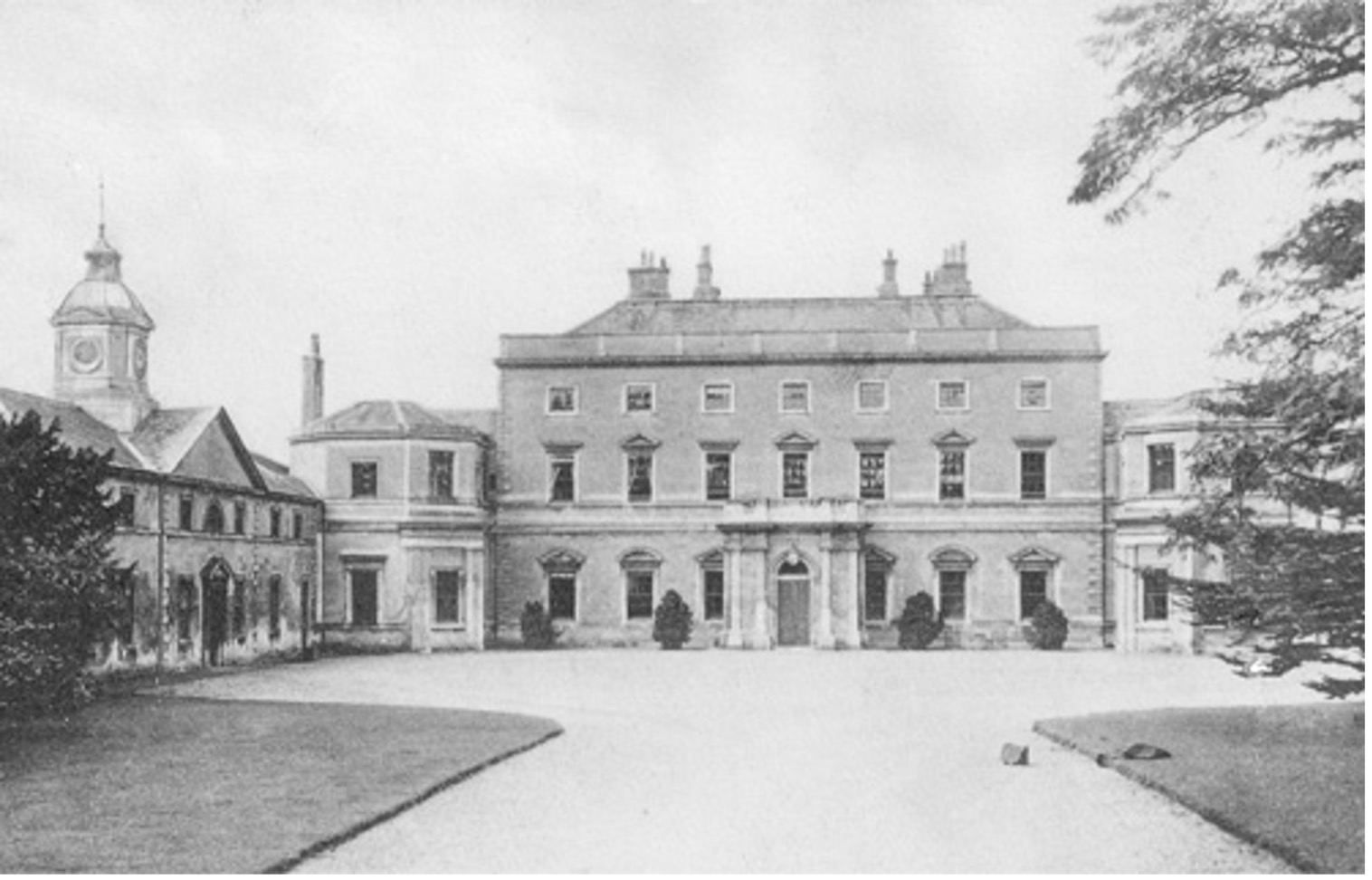
Syston Hall before it was demolished in 1934
Son of Thomas Rundell doctor of Widcombe Bath, born 1743. Apprenticed to William Rodgers jeweller of Bath on payment of £20. Arrived in London, 1767 or 1769, as a shopman to Theed and Pickett, Ludgate Hill, at a salary of £20 p.a.. Made partner with Picket in 1772 and acquired sole ownership of the business in 1785-6. Took John Bridge into partnership in 1788 and his nephew Edmund Walter Rundell by 1803, the firm being styled Rundell Bridge and Rundell from 1805. Appointed Goldsmith and Jeweller to the King in 1797, due it is said, to George III's acquaintanceship with John Bridge's relative, a farmer near Weymouth. He took Paul Storr into working partnership in 1807, an arrangement that lasted until 1819, when the latter gained independence. Only then was Rundell's mark entered as plateworker, 4th March, 1819. Address: 76 Dean Street, Soho, (the workshop). In 1823 John Bridge enters his first mark and it seems probable therefore that it was about this time that Rundell retired. He did not die however until 1827, leaving his fortune of 1.25 million to his nephew Joseph Neeld.
You May Also Like
A Paul Storr Soup Tureen & Cover
Paul Storr
A Pair of Silver-Gilt Comports
James Garrard
An Imposing Victorian Warwick Cruet
Victorian Oval Two-handled Verriere
James Garrard